Article last updated on 27th March 2026 by Dr. Abdul Qahar Khan Yasinzai
Note/Disclaimer:
Please read my entire experience as it is not limited to USMLE aspirants but also offers valuable lessons for newly enrolled MBBS students. I was not fortunate enough to receive proper guidance in the beginning, and I genuinely hope others won’t face the same. Take from my experience whatever suits you best; do not follow it exactly as it is. Everyone’s journey is different—many have achieved far greater success using entirely different methods. Always trust your instincts; they know you better than anyone else. I, too, read hundreds of experiences and ultimately created my own pattern.
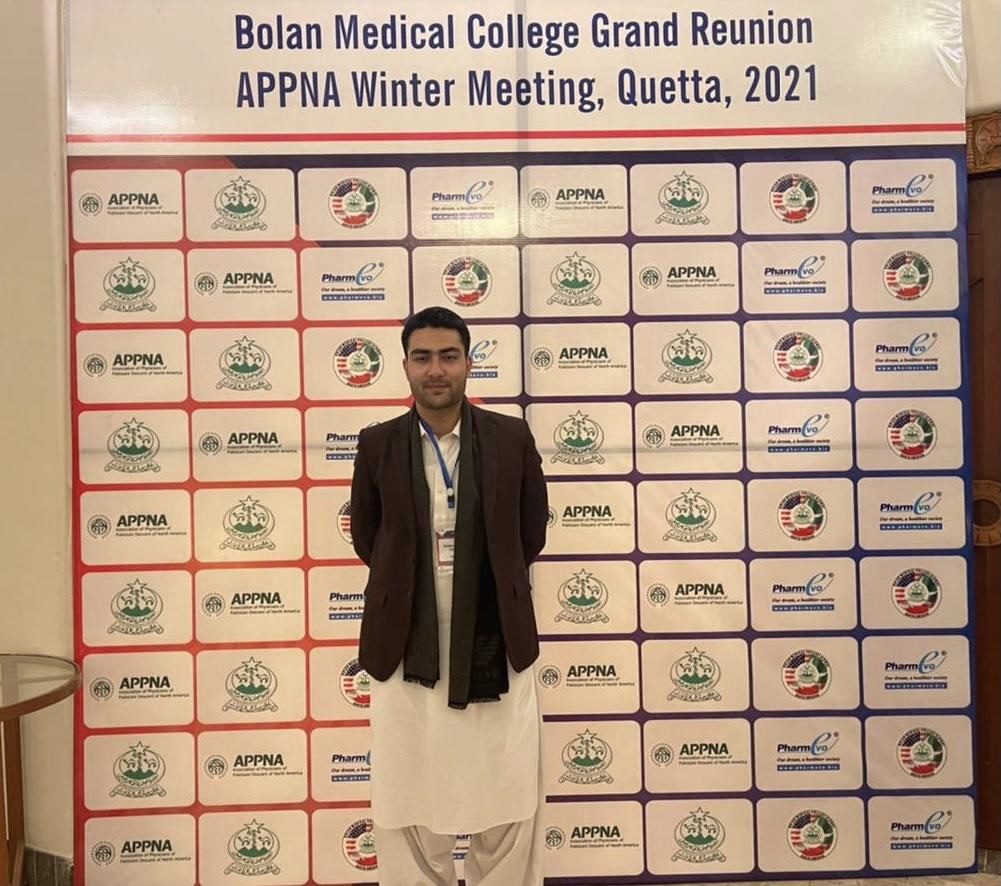
My name is Abdul Qahar Khan Yasinzai, a final-year MBBS student from the Batch of 2016–17 at Bolan Medical College, Quetta. I took the USMLE Step 1 on January 19, 2022, and scored 241.
It is truly a privilege to share my experience to help guide young Bolanians. I find greater joy in helping others succeed than in celebrating my own achievements.
I will begin by briefly sharing my journey and then conclude with key recommendations—the essential “dos and don’ts.” From the start, I have believed in doing everything with passion or not doing it at all. When I entered medical school, I was determined to pursue it with excellence. After learning from many people and reading numerous accounts, I realized that preparing for the USMLE is among the most challenging yet rewarding endeavors a medical student can undertake.
I began planning for it during my second year of MBBS. My strategy was simple: first, establish a strong foundation, and then strengthen it with high-yield resources.
Anatomy
During my basic years, I studied KLM Anatomy, which offers a more clinical perspective—and that’s what truly matters as a future doctor. Memorizing endless details like angles and borders felt obsolete and impractical. In my view, it’s almost an injustice when students are made to memorize non-clinical, outdated information instead of understanding real-world clinical applications.
I focused on what truly mattered—hernia anatomy, nerve injuries, surgical sites, injection sites, and major vessels—and ignored the rest. I never aimed to top professional exams; my goal was simply to understand medicine. My focus was more on functional anatomy—carpal tunnel, avascular necrosis of the scaphoid, and how supracondylar fractures injure the median nerve, causing paralysis of the lateral half of the hand. That, to me, was true learning.
Neuroanatomy
For Neuroanatomy, I relied on Dr. Najeeb’s lectures and made my own notes. Though lengthy, they became the iron foundation of my understanding. Later, Kaplan Neuroanatomy by Dr. White made the subject remarkably easy. My advice—don’t waste time on Snell or making notes; watching these two resources with any short book are more than enough during your early years. Also, never miss classes by Dr. Tariq Bazai—a teacher who simplifies complex anatomy like no one else.
Physiology
I loved reading Guyton, which gave me deep conceptual insight, though retention was difficult for exams. I supplemented it with Dr. Najeeb’s lectures, especially for cardiac physiology, which became effortless after that. Also, do understand it is very common to receive supple for; unknown reasons in our settings, never let such setbacks affect you. Viva exams often depend on luck, the teacher’s mood, or the questions drawn. Just focus on passing and moving forward.
Biochemistry
Initially, I studied Lippincott and Dr. Najeeb’s videos, memorizing every enzyme in glucose metabolism. Biochemistry has immense clinical relevance and is high yield for Step 1, so approach it with full concentration. However, I later realized that Lippincott was not efficient—I forgot most of it later. My sincere advice: use Kaplan Biochemistry along with Dr. Sam Turco’s lectures. You can revise Kaplan multiple times in the same time it takes to finish Lippincott once. I learned this lesson the hard way.
The Second Professional Year (3rd Year MBBS)
This year brought subjects I truly enjoyed, especially Pharmacology and Microbiology.
Pharmacology
I began with Lippincott and Dr. Najeeb’s lectures, completing both before transitioning to Kaplan Pharmacology with Dr. Lionel Raymon’s 2010 videos. I annotated everything and mastered the subject conceptually. My advice—skip Lippincott and do Kaplan multiple times instead; it’s more concise and high yield.
Microbiology
Sketchy Microbiology was a revelation—an absolute masterpiece. It turned micro from memorization into storytelling. I also used Levinson briefly but found it a waste of time. Later, I switched to MRS Parasitology, which was excellent, and supplemented with Becker’s Microbiology by Dr. Mary Ruebush. The combination of Sketchy + MRS is unbeatable.
General Pathology
I covered Dr. Najeeb’s lectures and the first chapter of Robbins. That was more than sufficient to build a strong base.
The COVID-19 Shutdown
When the pandemic hit, everything stopped—exams were delayed, and uncertainty loomed. But I used that time productively. I studied Kaplan Biochemistry (Dr. Sam Turco, 2014), Behavioral Sciences (Dr. Steven Daugherty), Immunology and Microbiology (Dr. Mary Ruebush), and Neuroanatomy (Dr. White, Kaplan) as mentioned above subject-wise. I then began Pathoma by Dr. Hussain Sattar—completed and annotated it in just 15 days. By the time 4th year began, I had already finished Special Pathology.
Since exams were still uncertain, I started doing offline UWorld, completing about 2000 questions before my 3rd-year exam. My first NBME (Form 15) early in 4th year scored 194, giving me confidence that I had already crossed the passing threshold with a full year still ahead.
Dedicated Phase: The High-Yield Year
Now came the crucial final stretch—the dedicated year of focused preparation. I started with First Aid for USMLE Step 1 (the Bible of Step 1) and paired it with Boards and Beyond by Dr. Jason Ryan. Words fall short in describing his brilliance—he explains in 10 minutes what medical school takes months to clarify.
After Biochemistry, I took the Amboss self-assessment (Feb 2021) and scored 206, which boosted my confidence immensely. Afterward, First Aid and Boards & Beyond took about seven months, finishing around September 2021. Meanwhile, I began the ECFMG registration process, which itself takes 4–5 months. I received my permit by November and booked my Step 1 exam for January 2022.
Epidemiology, Biostatistics & Ethics:
I studied Steven Daugherty’s lectures and 100 Ethics Cases, supplementing with Randy O’Neil and Dirty Medicine videos on YouTube. These were invaluable in the final two weeks before the exam.
Final Four Months
By this time, I had finished FA, BNB, and major Amboss annotations. I subscribed to UWorld (6-month plan) and began doing 40 questions per day. Simultaneously, I discovered Anki—specifically the AnKing deck,which I practiced for about 2 hours daily. It was difficult to sustain at first, but persistence built rhythm. I maintained a 90-day streak, averaging 8 hours of study per day, took one rest day, and then did another 45-day streak.
In November, I took NBME 18 and scored 232. A few weeks later, UWorld Self-Assessment 1 gave me 251—the result I had dreamed of.
I completed my full first pass of UWorld (~3600 questions) by January 2, 2022, leaving two weeks for final reinforcement. I re-watched Randy O’Neil and Dirty Medicine videos to strengthen biostatistics and ethics, then took UWorld Self-Assessment 2 on January 15, scoring 249. That confirmed my target range.
I arrived in Islamabad two days early to adjust my sleep cycle. The night before the exam, I struggled to fall asleep due to insomnia. I woke at 5 a.m., had strong coffee, packed protein bars, dry fruits, and dates, and reached the centre by 8 a.m.
It was a long, gruelling 8-hour day—but as they say, great achievements demand great endurance.
Clinical Years, Discipline, and Lessons Learned
On Wards and College System
Students should focus on making the most of their free time as the wards can be taken fairly flexibly. I recommend learning history-taking and basic examination skills within a few focused weeks in 3rd and 4th years. Save your energy for final year, when wards genuinely help strengthen practical skills and exam preparation.
I strongly urge you not to miss classes by excellent teachers such as:
Dr. Abid (Pharmacology), Dr. Naseer (HOD Pharmacology), Dr. Kaleem (Histology), Dr. Nadeem Samad (Pathology), Dr. Tariq Bazai (Anatomy), and Dr. Azmat (Anatomy) — among several others I may have missed here.
Discipline and Time Management
Time management was never an issue once I built discipline and consistency. I studied at least two hours daily for two to three consecutive years. The key to USMLE is not high intelligence; it is steady effort, called consistency. Don’t burn yourself by studying excessively for a few days and then resting for weeks. Study less but study daily.
I created yearly study plans, mapping out what I’d cover and by when. For example:
“I’ll study Pathoma from March 1–15, take a one-day break, and then start 100 Ethics Cases by March 21.”
I rarely met all my deadlines, but the planning kept me on track. Whenever I fell behind, I shortened breaks or doubled my effort to make up for lost time. The system wasn’t perfect, but it worked.
My Do’s and Don’ts Recommendations:
- Study smart, not hard. There’s no need to study massive resources for subjects you don’t plan to specialize in. If you’re not becoming a gynecologist, don’t drown yourself in Gynae textbooks. Learn enough to pass and move on. Medical education should ideally be modular — like BDS — producing focused specialists instead of overburdened generalists.
- Finish Kaplan early. Do Kaplan Biochemistry in 1st–2nd year. Explore new platforms like Physeo and Osmosis — they make concepts interactive and clinically relevant. For Anatomy, I also used Physeo, which filled my clinical gaps beautifully. Over the coming years, there will be more dramatic resources available, especially with the advent of AI. Keep up with new resources.
- Use short but standard books. Go for Pathoma, MRS, and Short Katzung, not local low-quality notes. National authors often copy text without structure. Short books allow multiple revisions — the real secret to retention. Long books like Robbins are “novels of medicine” — fascinating, but impossible to memorize or revise.
- Integrate USMLE resources early. Start First Aid from the first year. If you’re studying the brachial plexus, open that section in FA and understand every line. By the 4th year, you’ll already be familiar with most of the book.
- Start question banks early. Do AMBOSS and UWorld in your early years. They teach you clinical reasoning beyond rote memorization. For instance, textbooks may list “muscle weakness” for myositis, but Qbanks reveal that patients “struggle to button their shirts.” That’s real medicine.
- Use Amboss Library for quick lookups. It’s brilliant for X-rays, CTs, and histology references. Costs around $9/month (≈Rs.1700) and is worth every penny.
- Forensic and Community Medicine: These can be covered quickly. I passed Community Medicine after just a week of study — mainly through YouTube videos. However, if you plan an MPH or Medicolegal career, give them full attention. For me, First Aid and Steven Daugherty’s lectures already covered Epidemiology and Biostatistics, so one week was enough to finish the rest.
- Stage/Prof Marksheets. Marks don’t define your competence especially if they are non-standardized and suffers from biases. I was just passing many stages without the motivation to top it because questions often tested outdated knowledge irrelevant to clinical practice. Focus on what helps you become a better doctor.
- Avoid burnout. Medicine is infinite; even a lifetime isn’t enough to learn it all. Study 4–6 hours daily with consistency. I never studied more than 10 hours/day, even during my dedicated phase. Prioritize quality over quantity. It’s a marathon, not a sprint. When tired, remind yourself: this struggle will one day help you save lives.
- Use the Pomodoro method. I used a timer app that divided study time into 25-minute focused sessions followed by 5-minute breaks. Completing 8–12 such cycles daily gave me 3–5 highly productive hours. It builds focus and prevents fatigue.
For instance, in August, I logged 6075 study minutes, averaging 3.5 focused hours per day — every single day.
- Consistency is everything. I once maintained a 90-day Anki streak, studying two hours daily even during fever — just to keep the streak alive.
Beyond Books: Extracurricular and Personal Growth
- Engage in extracurriculars. I served as General Secretary of IFMSA-BMC, Head of the Writers’ Club, and Vice President (Academics) of Bolanian’s Research Forum. I also co-authored two published research papers. These roles shaped my leadership, communication, and confidence.
- Exercise regularly. I’ve been playing badminton for years, even during my Step 1 preparation, pausing only a month before the exam. Exercise saved me from burnout, depression, and anxiety — the hidden companions of long academic journeys.
- Balance study with relationships. Spend time with family and friends, but not at the expense of your study hours. I even did Anki on Eid-ul-Adha morning when I was free, but happily took a two-day break once family arrived. Balance is key.
- Be socially conscious. As educated individuals, we must advocate for societal issues and injustices around you. I actively participated in college affairs, led awareness campaigns, and even became part of High Court proceedings when certain students tried to delay our exam. The Chief Justice of BHC eventually ruled in our favor, with our name on the order. Never hesitate to raise your voice for what’s right.
- Read beyond medicine. Cultivate curiosity. I read Sapiens by Yuval Noah Harari, Confessions of an Economic Hitman, and A Brief History of Time. Reading expands your worldview and improves your English too — crucial for everyday life and your USMLE journey as well.
- Explore alternative paths. I also completed a BA in Political Science to keep other options open. In Pakistan, survival often demands flexibility; I wanted a potential path toward bureaucracy if needed.
Financial Aspect
Many brilliant BMC students face financial barriers despite exceptional talent. I was fortunate to afford it, but I believe we need scholarships or funding programs for deserving students.
Here’s a transparent breakdown of my USMLE Step 1 costs (at 2022 rates):
- Form 186: $150 (~Rs.24,000)
- Form 183: $1,155 (~Rs.187,000)
- Total exam cost: ~$1,305 (~Rs.225,000)
- UWorld (6-month subscription): ~Rs.80,000
- Mailing Form 183 to the US: ~Rs.6,000
- Optional Amboss Qbank: ~Rs.30,000 (3-month plan)
➡️ Estimated total: ≈ Rs.300,000
It’s a significant investment, but with determination and careful planning, it’s achievable — and life-changing.
Expect Step 2 CK to cost roughly the same as Step 1. Yes, this journey is financially heavy—but it’s genuinely transformative. Even if you don’t plan to train abroad, studying in the USMLE style can make you a far better clinician at home. I left this process able to interpret basic ECGs, X-rays, and CTs, and it changed me both as a learner and as a person.
Commonly Asked Questions
Q: I don’t have much time. What’s the shortest realistic path to passing Step 1?
A: Since Step 1 is now pass/fail, a pass is much more attainable. With a solid foundation, 4–6 months of focused prep can be enough to pass. Scoring highly is different: it took me about a year to move from an Amboss 206 to UWSA1 251. Even in pass/fail era, aim high—targeting ~250 on self-assessments sets you up for Step 2 CK, where many concepts repeat.
Q: I’m in 4th year. How should I start?
A: Start with First Aid (FA) and run it in parallel with Boards & Beyond (BNB). Use Google/Amboss Library and your notes to clarify lines you don’t understand. Don’t try to read Robbins/Goljan cover-to-cover for Step 1—that’s inefficient. Add Anki early; it’s incredible for detailed retention (e.g., brain tumor histology, nephron defects, rare syndromes like Liddle/Bartter/Rett/Sturge-Weber).
Q: What’s Anki, and which deck should I use?
A: Anki is a spaced-repetition flashcard system. Learn the basics (YouTube has excellent tutorials). I used AnKing Overhaul v9 system-wise: after finishing an FA chapter, I did about 2 hours/day of Anki for that chapter. I often read the entire FA reference page beneath each card (so I averaged ~100 cards/day). I skipped topics I’d already mastered (e.g., Biochem, Micro, Pharm).
Current deck: AnKing Overhaul v11 (look for the official/maintained source).
Q: I don’t have access to resources (Kaplan, Sketchy lectures, etc.). What should I do?
A: First, ask classmates/seniors—most cohorts maintain shared drives or study circles. Also consider student discounts and trial periods from legitimate platforms (e.g., Amboss library trials).
Q: How and when should I start registration for Step 1?
A: Begin ~6 months before your target date. Much of Pakistan has moved to electronic verification; if your institution still uses postal processes, expect delays and monitor your own email closely. Typical flow: college signs Form 183, ECFMG receives and processes (usually 2–8 weeks for undergrads, longer for grads), then ECFMG emails your permit. After that, book your exam on Prometric—ideally ≥3 months ahead to secure a seat.
Q: What were your self-assessment scores?
- NBME 15: 194 (Dec 2020)
- Amboss SA: 206 (Feb 2021)
- NBME 18: 230 (Nov 2021)
- UWSA1: 251 (Jan 3, 2022)
- UWSA2: 249 (Jan 15, 2022)
- Free 120: 85% (day before exam)
- Real exam: 241
Self-assessments highlight strengths/weaknesses; for me, late focus on Genetics and Biostatistics helped. If time allows, do the newer NBMEs—they can be very predictive.
Q: How did you approach Ethics & Communication?
A: These feel tricky because many options seem “reasonable.” Dirty Medicine and Randy O’Neil helped me build instincts. UWorld explanations + 100 Ethics Cases add pattern recognition. In the exam, the answer that aligns with patient safety, autonomy, and professionalism—the one your gut recognizes—tends to be right.
Q: What is UWorld, and how should I use it?
A: UWorld is the gold standard Qbank. It teaches clinical reasoning and how patients actually present.
My path: ~2000 offline questions first; after FA + BNB, I bought an online subscription and did ~40 Qs/day, finishing ~3600 Qs at an average of ~79%.
Tips:
- Budget ~4 months for a complete pass.
- Read every explanation, including wrong options.
- If possible, do two passes. I couldn’t because Step 1 was about to change to pass/fail, but a second pass likely would’ve boosted my score further.
- Quality over quantity always.
Q: Did you use AMBOSS?
A: I used the AMBOSS Library heavily (quick lookups, imaging, histology). I didn’t have time for the Qbank, but I recommend it if your schedule permits.
Q: How did you annotate FA and manage notes?
A: I converted FA into a ring binder (four-hole punch). For annotation, I’d remove a page, annotate on a flat surface, and re-insert. I also color-coded sources—BNB (blue), AMBOSS (red), UWorld (green).
If short on time, minimize annotation—it’s slow and you may not re-read it. In the final weeks, I simply snapped key UWorld explanations with a scanner app and made phone notes for rapid review.
Final Word
If anything remains unclear, email me—I’m happy to help peers across Balochistan (QIMS, LMC, MMC, JMC included).
Email: [email protected]
Twitter (A Qahar Kakar): @AYasinzaiMD
Facebook: facebook.com/Drstrange.X0/



Well done Mr Qahir ,Outstanding , i strongly encourge this artical for all the energetic Aspirants of Usmeli😊